08 December 2025

Mr. Spurgeon in Rome

Posted by Phil Johnson
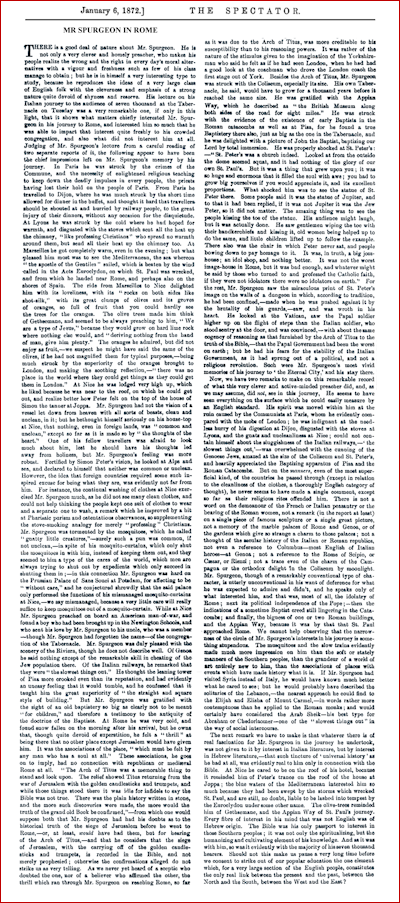
From The Spectator, 6 January 1872, pp. 10-11.
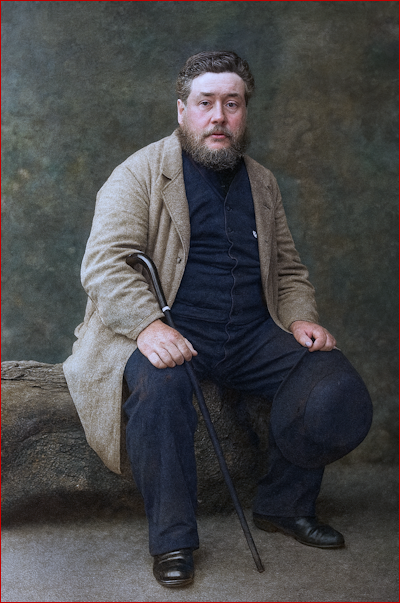
The reporter who wrote this account was not impressed with Charles Spurgeon's worldview. "The narrowness of the circle of Mr. Spurgeon's interests in his journey is something stupendous. . . . Every fibre of interest in his mind that was not English was of Hebrew origin. The Bible was his only passport to interest."

The reporter didn't acually hear Spurgeon's lecture; he wrote this account "from a careful reading of two separate reports of it." Nevertheless, it's a fascinating report of Mr. Spurgeon's 1871 journey to Rome.

MR. SPURGEON IN ROME

There is a good deal of nature about Mr. Spurgeon. He is not only a very clever and homely preacher, who makes his people realize the wrong and the right in every day's moral alternatives with a vigour and freshness such as few of his class manage to obtain; but he is in himself a very interesting type to study, because he reproduces the ideas of a very large class of English folk with the cleverness and emphasis of a strong nature quite devoid of shyness and reserve. His lecture on his Italian journey to the audience of seven thousand at the Tabernacle on Tuesday was a very remarkable one, if only in this light, that it shows what matters chiefly interested Mr. Spurgeon in his journey to Rome, and interested him so much that he was able to impart that interest quite freshly to his crowded congregation, and also what did not interest him at all. Judging of Mr. Spurgeon's lecture from a careful reading of two separate reports of it, the following appear to have been the chief impressions left on Mr. Spurgeon's memory by his journey.

In Paris he was struck by the crimes of the Commune, and the necessity of enlightened religious teaching to keep down the deadly impulses in every people, the priests having lost their hold on the people of Paris. From Paris he travelled to Dijon, where he was much struck by the short time allowed for dinner in the buffet, and thought it hard that travellers should be shouted at and hurried by railway people, to the great injury of their dinners, without any occasion for the disquietude.

At Lyons he was struck by the cold where he had hoped for warmth, and disgusted with the stoves which sent all the heat up the chimney, "like professing Christians" who spread no warmth around them, but send all their heat up the chimney too. At Marseilles he got completely warm, even in the evening; but what pleased him most was to see the Mediterranean, the sea whereon "the apostle of the Gentiles" sailed, which is beaten by the wind called in the Acts Euroclydon, on which St. Paul was wrecked, and from which he landed near Rome, and perhaps also on the shores of Spain.

The ride from Marseilles to Nice delighted him with its loveliness, with its "rocks on both sides like shot-silk," with its great clumps of olives and its groves of oranges, so full of fruit that you could hardly see the trees for the oranges. The olive trees made him think of Gethsemane, and seemed to be always preaching to him, "We are a type of Jesus," because they would grow on hard lime rock where nothing else would, and "deriving nothing from the hand of man, give him plenty." The oranges he admired, but did not enjoy as fruit,—we suspect he might have said the same of the olives, if he had not magnified them for typical purposes,—being much struck by the superiority of the oranges brought to London, and making the soothing reflection,—"there was no place in the world where they could get things as they could get them in London."

At Nice he was lodged very high up, which he liked because he was near to the roof, on which he could get out, and realize better how Peter felt on the top of the house of Simon the tanner at Joppa. Mr. Spurgeon had not the vision of a vessel let down from heaven with all sorts of beasts, clean and unclean, in it; but he bethought himself seriously on his house-top at Nice, that nothing, even in foreign lands, was "common and unclean," except so far as it is made so by "the thoughts of the heart." One of his fellow travellers was afraid to look much about him, lest he should have his thoughts led away from holiness, but Mr. Spurgeon's feeling was more robust. Fortified by Simon Peter's vision, he looked at Alps and sea, and declared to himself that neither was common or unclean.

However, the idea that foreign countries required some such inspired excuse for being what they are, was evidently not far from him. For instance, the continual washing of clothes at Nice exercised Mr. Spurgeon much, as he did not see many clean clothes, and could not help thinking the people kept one suit of clothes to wear and a separate one to wash, a remark which he improved by a hit at Pharisaic purism and ostentatious observances, so supplementing the stove-smoking analogy for merely "professing" Christians. Mr. Spurgeon was tormented by the mosquitoes, which he called "gnatty little creatures,"—surely such a pun was common, if not unclean,—in spite of his mosquito-curtains, which only shut the mosquitoes in with him, instead of keeping them out, and they seemed to him a type of the cares of the world, which men are always trying to shut out by expedients which only succeed in shutting them in;—in this connection Mr. Spurgeon was hard on the Prussian Palace of Sans Souci at Potsdam, for affecting to be "without care," and he conjectured shrewdly that the said palace only performed the functions of his mismanaged mosquito-curtains at Nice,—we say mismanaged, because a very little care will really suffice to keep mosquitoes out of a mosquito-curtain.

While at Nice Mr. Spurgeon preached on board an American man-of-war, and found a boy who had been brought up in the Newington Schools, and who sent his love by Mr. Spurgeon to his uncle, who was a member—though Mr. Spurgeon had forgotten the name—of the congregation of the Tabernacle. Mr. Spurgeon was duly pleased with the scenery of the Riviera, though he does not describe well. Of Genoa he said nothing except of the remarkable skill in cheating of the Jew population there. Of the Italian railways, he remarked that they were "the slowest things out." He thought the leaning tower of Pisa more crooked even than its reputation, and had evidently an uneasy feeling that it would tumble, and he confessed that it taught him the great superiority of "the straight and square style of building." But Mr. Spurgeon was gratified with the sight of an old baptistery so big as clearly not to be meant "for children," and therefore a testimony to the antiquity of the doctrine of the Baptists.

At Rome he was very cold, and found snow fallen on the morning after his arrival, but he owns that, though quite devoid of superstition, he felt a "thrill" at being there that no other place except Jerusalem would have given him. It was the associations of the place, "which must be felt by any man who has a soul at all." These associations, he goes on to imply, had no connection with republican or mediƦval Rome at all.

The Arch of Titus was a memorable thing to stand and look upon. The relief showed Titus returning from the war of Jerusalem with the golden candlesticks and trumpets; and while those things stood there it was idle for infidels to say the Bible was not true. There was the plain history written in stone, and the more such discoveries were made, the more would the truth of the grand old Book be confirmed,"—from which one would suppose both that Mr. Spurgeon had had his doubts as to the historical truth of the siege of Jerusalem before he went to Rome,—or, at least, would have had them, but for hearing of the Arch of Titus,—and that he considers that the siege of Jerusalem, with the carrying off of the golden candlesticks and trumpets, is recorded in the Bible, and not merely prophesied; otherwise the confirmations alleged do not strike us as very telling. As we never yet heard of a sceptic who doubted the one, nor of a believer who affirmed the other, the thrill which ran through Mr. Spurgeon on reaching Rome, so far as it was due to the Arch of Titus, was more creditable to his susceptibility than to his reasoning powers. It was rather of the nature of the stimulus given to the imagination of the Yorkshireman who said he felt as if he had seen London, when he had had a good look at the coachman who drove the London coach the first stage out of York.

Besides the Arch of Titus, Mr. Spurgeon was struck with the Coliseum, especially its size. His own Tabernacle, he said, would have to grow for a thousand years before it reached the same size. He was gratified with the Appian Way, which he described as "the British Museum along both sides of the road for eight miles." He was struck with the evidence of the existence of early Baptists in the Roman catacombs as well as at Pisa, for he found a true Baptistery there also, just as big as the one in the Tabernacle, and he was delighted with a picture of John the Baptist, baptizing our Lord by total immersion.

He was properly shocked at St. Peter's:—"St. Peter's was a church indeed. Looked at from the outside the dome seemed squat, and it had nothing of the glory of our own St. Paul's. But it was a thing that grew upon you; it was so huge and enormous that it filled the soul with awe; you had to grow big yourselves if you would appreciate it, and its excellent proportions. What shocked him was to see the statue of St. Peter there. Some people said it was the statue of Jupiter, and to that it had been replied, if it was not Jupiter it was the Jew Peter, so it did not matter. The amazing thing was to see the people kissing the toe of the statue. His audience might laugh, but it was actually done. He saw gentlemen wiping the toe with their handkerchiefs and kissing it, old women being helped up to do the same, and little children lifted up to follow the example. There also was the chair in which Peter never sat, and people bowing down to pay homage to it. It was, in truth, a big joss-house; an idol shop, and nothing better. It was not the worst image-house in Rome, but it was bad enough, and whatever might be said by those who turned to and professed the Catholic faith, if they were not idolators there were no idolators on earth."

For the rest, Mr. Spurgeon saw the miraculous print of St. Peter's image on the walls of a dungeon in which, according to tradition, he had been confined,—made when he was pushed against it by the brutality of his guards,—saw, and was wroth in his heart. He looked at the Vatican, saw the Papal soldier higher up on the flight of steps than the Italian soldier, who stood sentry at the door, and was convinced,—with about the same cogency of reasoning as that furnished by the Arch of Titus to the truth of the Bible,—that the Papal Government had been the worst on earth; but he had his fears for the stability of the Italian Government, as it had sprung out of a political, and not a religious revolution. Such were Mr. Spurgeon's most vivid memories of his journey to the Eternal City,' and his stay there.

Now, we have two remarks to make on this remarkable record of what this very clever and active-minded preacher did, and, as we may assume, did not, see in this journey, He seems to have seen everything on the surface which he could easily measure by an English standard. His spirit was moved within him at the rain caused by the Communists at Paris, whom he evidently compared with the mobs of London; he was indignant at the needless hurry of his digestion at Dijon, disgusted with the stoves at Lyons, and the gnats and uncleanliness at Nice; could not contain himself about the sluggishness of the Italian railways,—'the slowest things out,'—was overwhelmed with the cunning of the Genoese Jews, amazed at the size of the Coliseum and St. Peter's, and heartily appreciated the Baptizing apparatus of Pisa and the Roman Catacombs. But on the manners, even of the most superficial kind, of the countries he passed through (except in relation to the cleanliness of the clothes, a thoroughly English category of thought), he never seems to have made a single comment, except so far as their religious rites offended him.

There is not a word on the demeanour of the French or Italian peasantry or the bearing of the Roman women, not a remark (in the report at least) on a single piece of famous sculpture or a single great picture, not a memory of the marble palaces of Rome and Genoa, or of the gardens which give so strange a charm to those palaces; not a thought of the secular history of the Italian or Roman republics, not even a reference to Columbus—most English of Italian heroes—at Genoa; not a reference to the Rome of Scipio, or Camel, or Rienzi; not a trace even of the charm of the Campagua or the orthodox delight In the Coliseum by moonlight.

Mr. Spurgeon, though of a remarkably conventional type of character, is utterly unconventional in his want of deference for what be was expected to admire and didn't, and he speaks only of what interested him, and that was, most of all, the idolatry of Rome; next its political independence of the Pope;—then the indications of a sometime Baptist creed still lingering in the Catacombs; and finally, the bigness of one or two Roman buildings, and the Appian Way, because it was by that that St. Paul approached Rome. We cannot help observing that the narrowness of the circle of Mr. Spurgeon's interests in his journey is something stupendous. The mosquitoes and the slow trains evidently made much more impression on him than the soft or stately manners of the Southern peoples, than the grandeur of a world of art entirely new to him, than the associations of places with events which have made history what it is. If Mr. Spurgeon had visited Syria instead of Italy, he would have known much better what he cared to see; but he would probably have described the solitaries of the Lebanon,—the nearest approach he could find to the Elijah and Elisha of Mount Carmel,—in words rather more contemptuous than he applied to the Roman monks; and would certainly have considered the Arab Sheik—his best type for Abraham or Chedorlaomer—one of the "slowest things out" in the way of social intercourse.

The next remark we have to make is that whatever there is of real fascination for Mr. Spurgeon in the journey he undertook, was not given to it by interest in Italian literature, but by interest in Hebrew literature,—that such tincture of universal history as he had at all, was evidently real to him only in connection with the Bible. At Nice he cared to be on the roof of his hotel, because it reminded him of Peter's trance on the roof of the house at Joppa; the blue waters of the Mediterranean interested him so much because they had been swept by the storms which wrecked St. Paul, and are still, no doubt, liable to be lashed into tempest by the Euroclydon under some other name. The olive-trees reminded him of Gethsemane, and the Appian Way of St. Paul's journey. Every fibre of interest in his mind that was not English was of Hebrew origin. The Bible was his only passport to interest in those Southern peoples; it was not only the spiritualizing, but the humanizing and cultivating element of his knowledge. And as it was with him, so was it evidently with the majority of his seven thousand hearers. Should not this make us pause a very long time before we consent to strike out of our popular education the one element which, for a very large section of the English people, constitutes the only real link between the present and the past, between the North and the South, between the West and the East?

07 December 2025

Spurgeon on Active Obedience

Posted by Phil Johnson

This excerpt is from sermon #627, "Justification and Glory," in The Metropolitan Tabernacle Pulpit (London: Passmore & Alabaster, 1865) 11:241-44.

Spurgeon is defending the truth that the perfect obedience Christ rendered throughout his earthly life counts vicariously for all who are united with Him by faith. Christ's righteousness is imputed to them.

In other words, Christ's active obedience, not ours, gives us a righteous standing before God.

ustification has for its matter and means the righteousness of Jesus Christ, set forth in his vicarious obedience, both in life and death.

Certain modern heretics, who ought to have known better, have denied this, and there were some in older times who, by reason of ignorance, said that there was no such thing as the imputed righteousness of Jesus Christ. He who denies this, perhaps unconsciously, cuts at the root of the gospel system.

I believe that this doctrine is involved in the whole system of substitution and satisfaction; and we all know that substitution and a vicarious sacrifice are the very marrow of the gospel of Christ. The law, like the God from whom it came, is absolutely immutable, and can be satisfied by nothing else than a complete and perfect righteousness, at once suffering the penalty for guilt incurred already, and working out obedience to the precept which still binds those upon whom penalty has passed. This was rendered by the Lord Jesus as the representative of his chosen, and is the sole legal ground for the justification of the elect.

As for me, I can never doubt that Christ's righteousness is mine, when I find that Christ himself and all that he has belongs to me; if I find that he gives me everything, surely he gives me his righteousness among the rest. And what am I to do with that if not to wear it? Am I to lay it by in a wardrobe and not put it on? Well, sirs, let others wear what they will; my soul rejoices in the royal apparel. For me, the term "the Lord our righteousness" is significant and has a weight of meaning. Jesus Christ shall be my righteousness so long as I read the language of the apostle, "he is made of God unto us wisdom and righteousness, sanctification, and redemption."

My dear brethren, do not doubt the imputed righteousness of Jesus Christ, whatever cavillers may say. Remember that you must have a righteousness. It is this which the law requires. I do not read that the law made with our first parents required suffering; it did demand it as a penalty after its breach; but the righteousness of the law required not suffering, but obedience. Suffering would not release us from the duty of obeying. Lost souls in hell are still under the law, and their woes and pangs if completely endured would never justify them. Obedience, and obedience alone, can justify, and where can we have it but in Jesus our Substitute?

Christ comes to magnify the law: how does he do it but by obedience? If I am to enter into life by the keeping of the commandments, as the Lord tells me in the nineteenth chapter of Matthew, and the seventeenth verse, how can I except by Christ having kept them? and how can he have kept the law except by obedience to its commands? The promises in the Word of God are not made to suffering; they are made to obedience: consequently Christ's sufferings, though they may remove the penalty, do not alone make me the inheritor of the promise.

"If thou wilt enter into life," said Christ, "keep the commandments." It is only Christ's keeping the commandments that entitles me to enter life. "The Lord is well pleased for his righteousness, sake; he will magnify the law, and make it honourable." I do not enter into life by virtue of his sufferings—those deliver me from death, those purge me from filthiness, but, entering the enjoyments of the life eternal must be the result of obedience; and as it cannot be the result of mine, it is the result of his which is imputed to me.

We find the apostle Paul putting Christ's obedience in contrast to the disobedience of Adam: "As by one man's disobedience many were made sinners, so by the obedience of one shall many be made righteous." Now this is not Christ's death merely, but Christ's active obedience, which is here meant, and it is by this that we are made righteous. Beloved, you need not sing with stammering tongues that blessed verse of our hymn,—

"Jesus, thy perfect righteousness,
My beauty is, my glorious dress."

For despite all the outcry of modern times against that doctrine, it is written in heaven and is a sure and precious truth to be received by all the faithful, that we are justified by faith through the righteousness of Christ Jesus imputed to us. See what Christ has done in his living and in his dying, his acts becoming our acts and his righteousness being imputed to us, so that we are rewarded as if we were righteous, while he was punished as though he had been guilty.

C. H. Spurgeon

05 December 2025

Spurgeon's Love Letters

posted by Phil Johnson

The following article was published Tuesday, 27 September 1898 in The Advertiser, an Adelaide, Australia newspaper (p. 5).

SPURGEON'S LOVE LETTERS
REMARKABLE DISCLOSURES BY HIS WIDOW.

(From our Special Correspondent.)
London, August 26, 1898.

The most interesting sections of the second volume of the "Life of Spurgeon" are the extraordinary love letters which he addressed to his wife and the account which that lady gives of her courtship. The first time she saw her future husband he occupied the pulpit of New Park-street on the Sunday when he preached his first sermon there.

After it had been settled that young Spurgeon should occupy New Park-street pulpit with a view to the permanent pastorate, Miss Thompson used to meet him occasionally at the house of their common friends, Mr. and Mrs. Olney, and she sometimes went to hear him preach. About this time she became alarmed at her backsliding spiritual state, and was moved to seek guidance from one of the pillars of the Sunday-School, Mr. Olney's second son. "He may have told the new pastor about me," she says, "I cannot say; but one day I was greatly surprised to receive from Mr. Spurgeon an illustrated copy of 'The Pilgrim's Progress,' with this inscription:—'Miss Thompson, with desires for her progress in the blessed pilgrimage, from C. H. Spurgeon. Ap. 20,1854.'" Their friendship steadily grew after this, and on June 10 the lover made his first "revelation." They were present with a large party of friends at the opening of the Crystal Palace on that day:—

"We occupied some raised seats at the end of the palace where the great clock is now fixed. As we sat there talking, laughing, and amusing ourselves as best we could, while waiting for the procession to pass by, Mr. Spurgeon handed me a book, into which he had been occasionally dipping, and pointing to some particular lines, said—"What do you think of the poet's suggestion in those verses?" The volume was Martin Tupper's "Proverbial Philosophy." The pointing finger guided my eyes to the chapter on "Marriage," of which the opening sentences ran thus:-

Seek a good wife of thy God, for she is the best gift of His providence;
Yet ask not in bold confidence that which He hath not promised:
Thou knowest not His goodwill: be thy prayer then submissive thereunto,
And leave thy petition to His mercy, assured that He will deal well with thee.
If thou art to have a wife of thy youth she is now living on the earth;
Therefore think of her and pray for her weal.

"Do you pray for him who is to be your husband?" said a soft low voice in my ear—so soft that no one else heard the whisper.

I do not remember that the question received any vocal answer, but my fast-beating heart, which sent a tell-tale flush to my cheeks, and my downcast eyes, which feared to reveal the light which at once dawned in them, may have spoken a language which love understood. From that moment a very quiet and subdued little maiden sat by the young pastor's side, and while the brilliant procession passed round the palace I do not think she took so much note of the glittering pageant defiling before her as of the crowd of newly awakened emotions which were palpitating within her heart."

There were nearly two months of "loving looks and tender, tones and clasping hands," and the Crystal Palace remained the lovers' trysting place, where they met on one afternoon every week if his preaching engagements permitted. Then on August 2 came the "verbal confession," and Miss Thompson made the following entry in her diary against that day:—"It is impossible to write down all that occurred this morning. I can only adore in silence the mercy of my God, and praise Him for all His benefits."

The love-letters here are among the most remarkable love-letters ever published. She is "My own doubly-dear Susie," and he "My dearest;" he "your much-loved, and ardently loving, C. H. S.;" she "fondly and faithfully yours, Susie." On January 11, 1855, he acknowledges having received her confession of repentance and faith. "I fatter no one," he writes, "but allow me to say, honestly, that few cases which have come under my notice are so satisfactory as yours. Mark, I write not now as your admiring friend, but impartially as your pastor." And so in this epistle he signs himself, "Yours with pure and holy affection, as well as terrestrial love." The following letter was written from Scotland, whither the pastor had gone, partly on a holiday, and partly to fulfil many preaching engagements:—

"Aberfeldy,
"July 17th, 1855.

"My Precious Love—"Your dearly prized note came safely to hand, and verily it did excel all I have ever read, even from your own loving pen. Well, I am all right now. Last Sabbath I preached twice; and to sum up all in a word, the services were 'glorious.' In the morning Dr. Patterson's place was crammed, and in the evening Dr. Wardlaw's Chapel was crammed to suffocation by more than 2,500 people, while persons outside declared that quite as many went away. My reception was enthusiastic; never was greater honor given to mortal man. They were just as delighted as are the people at Park-street. To-day I have had a fine drive with my host and his daughter. Tomorrow I am to preach here. It is quite impossible for me to be left in quiet. Already letters come in begging me to go here, there, and everywhere. Unless I go to the North Pole I never can get away from my holy labor.

"Now to return to you again, I have had day-dreams of you while driving along, I thought you were very near me. It is not long, dearest, before I shall again enjoy your sweet society, if the providence of God permit. I knew I loved you very much before, but now, I feel how necessary you are to me; and you will not lose much by my absence if you find me, on my return, more attentive to your feelings, as well as equally affectionate. I can now thoroughly sympathise with your tears, because I feel in no little degree that pang of absence which my constant engagements prevented me from noticing when in London. How then must you, with so much leisure, have felt my absence from you, even though you well knew that it was unavoidable on my part. My darling, accept love of the deepest and purest kind from one who is not prone to exaggerate, but who feels that here there is not room for hyperbole. Think not that I weary myself by writing; for, dearest, it is my delight to please you, and solace an absence which must be even more dreary to you than to me since travelling and preaching lead me to forget it. My eyes ache for sleep, but they shall keep open till I have invoked the blessings from above—mercies temporal and eternal—to rest on the head of one whose name is sweet to me, and who equally loves the name of her own, her much-loved C.H.S."

He presented her at this time with a book bearing the title of "The Pulpit Library," the first published volume of his sermons. The occasion of the gift is expressed by the inscription:—"In a few days it will be out of my power to present anything to Miss Thompson. Let this be a remembrance of our happy meetings and sweet conversations.—Dec 22, 1855. C. H. Spurgeon." The wedding took place on January 8,1856, in New Park-street Chapel amid great enthusiasm. Prospective brides and bridegrooms will be deeply interested in Mr. Spurgeon's inscription in the family Bible recording the marriage; and not less in the "loving comment" he added to this inscription eleven years afterwards:—

Charles Haddon Spurgeon and Susannah Thompson were by the gracious arrangement of Divine Providence most happily married at New Park-street Chapel by Dr. Alexander Fletcher on Tuesday, January 8, 1856.

And as year rolls after year
Each to other still more dear.

C. H. Spurgeon

03 December 2025

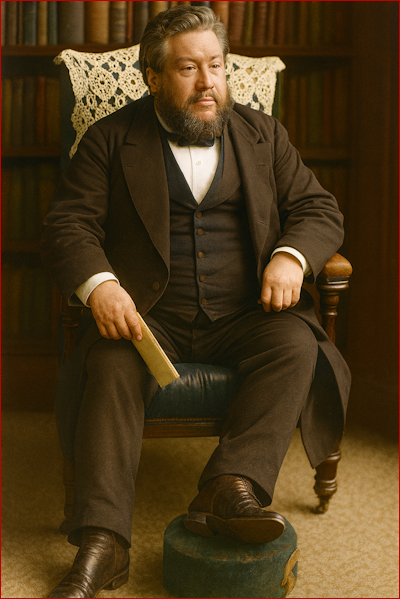
A Brief Note on Plagiarism

by C. H. Spurgeon
from The Sword and the Trowel (London: Passmore & Alabaster, 1891) pp. 178-79.

t is not to be thought of for a moment that any minister would appropriate a sermon bodily, and preach it as his own. Such things have been done, we suppose, in remote ages, and in obscure regions; but nobody would justify a regular preacher in so doing. We give great license to good laymen, who are occupied with business all the week, and too much pressed with public engagements to have time to prepare. When princes and peers have speeches made for them, a sort of toleration is understood; and should a public functionary be so anxious to do good that he delivers a sermon, we excuse him if he has largely compiled it; yes, and if he memorises the bulk of it, and bravely says so, we have no word of censure. But for the preacher who claims a divine call, to take a whole discourse out of another preacher's mouth, and palm it off as his own, is an act which will find no defender.

Yet, he that never quotes, will never be quoted. To stop to give the name of the writer, and book from which the extract is made, would be pedantic, and would break the effect aside from the purpose of a discourse. Verbatim quotations some of us can seldom make; because we have shockingly bad memories for other men's words, and we should have to write out the extracts and read them, which would greatly embarrass us in an extempore sermon. We can, as a rule, only give the sense, and, if possible, say that we owe it to a learned divine, or a standard writer. Even this cannot always be done, since wide readers cannot possibly remember the source of every thought which they repeat.

As to thoughts: if a speaker should be able to confine himself to ideas which never entered into mortal brain before, he would have few enough, or none at all. Our predecessors have, in substance, already thought all that is worth thinking; and all that we can do is to shape these matters in our own mould, and deliver them in our own language. Everything that is worth hearing in the most original sermons could be found somewhere else by a man who had the Bodleian at his command, and an index of it in his head. To shut men up to absolutely new thoughts, would be to condemn them to silence, to forbid them to use their Bibles, and to make total ignorance of all that is written in books a main qualification for the pulpit. Even with such an inglorious unacquaintance with the utterances of others, the mind, to be a mind at all, would be forced unconsciously to follow trodden tracks, unless it ran into utter wildness of almost inconcievable heresy. Some would appear to be trying this plan; but their success in folly more than equals their achievement in originality. The man who aims at edifying his hearers, reads instructive authors with attention, and, after sitting at their feet as a learner, inwardly digests their teaching. He "eats the roll," and so makes it his own, and, in due course, delivers to his people that which he has himself enjoyed, with much more that has come of it. We do not call this plagiarism; and if any choose to do so, we shall defend the imaginary offence, and glory in committing it.

It is to be feared that really vicious plagiarism must be getting very common, since we note that a gentleman who was prosecuted for a breach of promise, was found to have committed another breach also; for he had copied his love-letters from a story book. His heart must have been in a rather artificial condition when his passion could be expressed in another man's words. The same remark might be made in reference to a preacher's heart, if he found another man's language the exact exponent of his own emotions. He who buys manuscript sermons, paying so much for a sufficient quantity to last him through a quarter of a year, would soon either to have no heart at all, or else to abide in constant bondage; since he never uses his own powers freely, but runs on in his purchased discourse like a man racing in a sack. For a deacon, or other good man, to read a profitable sermon, and say that he is doing so, is a praiseworthy action; but for a pastor to buy ready-made discourses, and voice them as his own, is the reverse. If a man has no message from God, let him hold his tongue; and if he is tempted to borrow another's utterances, let him beware of that Scripture which saith, "Behold, I am against the prophets, saith the Lord, that steal my words every one from his neighbour."

So far as Spurgeon's Sermons are concerned, the author does not take out a patent for them; but, on the contrary, would be glad for anyone to borrow from them, or read them publicly. The gracious truths which we preach we would publish to the four winds of heaven. There might be a question as to copyright should anyone publish a whole sermon as his own, as a learned professor once did; but to read them as Spurgeon's Sermons is an honour done to the preacher, for which he is grateful. One brother turned our sermons into Welsh, and then translated them back again into English, and so made them his own; who can find any fault with him? Very wise people would scorn to be thus indebted to any man; and yet their own sermons are such, that the people could not be worse fed even if their shepherd did borrow a little corn from a neighbour's granary. To feed your children on bread not made at home may be risky; but not to feed them at all is worse. One's own coat fits him best; but when the snow lies thick on the ground, it would be better to borrow a friend's wrapper than go out with none at all. Plagiarism is not to be commended; but there are offences of a more crimson dye than this.

C. H. Spurgeon

02 December 2025

Spurgeon's Handling of Solomon's Song

by Phil Johnson

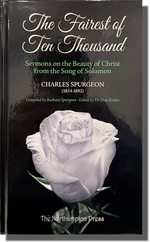
The following article is the foreword I wrote for The Fairest of Ten Thousand, a fine collection of Charles Spurgeon's sermons on texts from the Song of Solomon. The book is available in hardcover from The Northampton Press.

harles Spurgeon loved the Song of Solomon. Sixty-three of his published sermons are based on texts from Solomon's Song. That's two-plus sermons a year on average, twice as many messages as Spurgeon preached from Colossians. In fact, Spurgeon's unabridged Song of Solomon sermons contain enough material to fill a fifteen-hundred-page book with a typeface smaller than you are now reading. All that material was drawn from an Old Testament poetic love song that most preachers would say is the single most difficult book in Scripture from which to preach.
Spurgeon said:

If I must prefer one book above another, I would prefer some books of the Bible for doctrine, some for experience, some for example, some for teaching, but let me prefer this book above all others for fellowship and communion. When the Christian is nearest to heaven, this is the book he takes with him. There are times when he would leave even the Psalms behind, when standing on the borders of Canaan. When he is in the land of Beulah, and he is just crossing the stream, and can almost see his Beloved through the rifts of the storm-cloud, then it is he can begin to sing Solomon's Song. This is about the only book he could sing in heaven, but for the most part, he could sing this through, these still praising him who is his everlasting lover and friend.1

The Song of Solomon is, of course, a song about intimate love. It celebrates the bonds of affection between husband and wife—specifically between Solomon and his queen. It is filled with expressions of tender warmth and intense desire. Its imagery is so vivid and the metaphorical pictures of marital passion so powerful that the ancient rabbis forbade young men to read it until they reached the sacerdotal age of thirty (see Numbers 4:47). In Spurgeon's words, "This book was called by the Jews, 'the Holiest of Holies'; they never allowed anyone to read it till he was thirty years of age."2

Spurgeon (in accord with Victorian sensibilities) paid scant attention to the historical context of Solomon's song. Passing over the literal sense of Solomon's love song, he regularly preached from this book about Christ's love for His church (and vice versa). He regarded the poetry of Solomon's Song as "the language of a soul longing for the view of Jesus Christ in grace."3

Spurgeon has frequently been vilified in the current age for his handling of these texts. Some of today's rude-and-randy hipster preachers have viciously mocked Spurgeon for the respect he showed to Victorian modesty—while they themselves have reduced Solomon's love song to a vulgar sex manual. More significantly, Spurgeon has taken fire from advocates of sound expository preaching for his exegesis of the poetry. He is often accused of spiritualizing and allegorizing Solomon's song in a way that is wholly unwarranted by the text itself.

When handling the Song of Solomon, Spurgeon did take some hermeneutical shortcuts that we might well quibble with.

For example, his earliest published sermon on Solomon's Song begins with these words: "I shall not, this evening, attempt to prove that the Song of Solomon has a spiritual meaning. I am sure it has." He went on to give some reasons why he did not believe the Shulammite in the poem was the daughter of Pharaoh mentioned in 1 Kings 3:1. He did not then explain the actual historical background of the poem. He simply stated dogmatically, "This is Jesus speaking to his Church."4

We might quibble with Spurgeon's hermeneutical shortcut, but the point he was ultimately making is not altogether invalid. Marriage is, after all, a picture of Christ and His church (Ephesians 5:22-33). Spurgeon's dogmatic assertion simply echoes the words of the apostle: "This mystery [marriage] is profound, and I am saying that it refers to Christ and the church" (v. 31). In the preceding verse, Paul had Quoted Genesis 2:24 ("Therefore a man shall leave his father and his mother and hold fast to his wife, and they shall become one flesh"), which is the original divine mandate for the institution of marriage.


If marriage itself "refers to Christ and the church," and Solomon's song is a poem about marital affection, then it is not at all far fetched. to say, as Spurgeon did, that a Holy-spirit-inspired poem about marriage "is Jesus speaking to His Church."

A careful expositor today would no doubt handle these texts somewhat differently from Spurgeon. We wouldn't hesitate to acknowledge the author's original meaning and the proper historical context of the poem. Nevertheless, given the fact that the whole purpose of marriage in the first place is to serve as a living, holy picture of Christ's union with the church, there are many valid and important spiritual truths about Christ's love for His people to be gleaned from the Song of Solomon. It may well be that those who omit this aspect of Solomon's song have missed the most important point of all.

In any case, Spurgeon's approach is vastly superior to the boorish way stylish postmodern preachers have recently tried to treat the book as an explicit sex manual or an evangelical Kama Sutra. As you read these sermons, I trust you will be captivated by the lofty way Spurgeon unfolds the real significance of marital love, the reverent way he honors Christ, and the genuine desire he has for the whole church to see our Lord in all His glory. Above all, I trust you'll begin to appreciate Spurgeon's conviction that Christ alone is "altogether lovely."

_________________

1. Charles Spurgeon, The New Park Street Pulpit, 6 vols. (London: Passmore & Alabaster, 1859), 5:458.

2. Ibid.

3. Charles Spurgeon, The Metropolitan Tabernacle Pulpit, 63 vols. (London: Passmore & Alabaster, 1863), 9:625.

4. The New Park Street Pulpit, ibid., 5:457ff.

Phil's signature


16 November 2025

Some Thoughts on Sermon Preparation

by Phil Johnson
"Be diligent to present yourself approved to God as a workman who does not need to be ashamed, accurately handling the word of truth" (2 Timothy 2:15).

ack in the era when I was blogging on a regular basis, there was a lot of discussion about the ethical propriety of pastors' paying for research and writing from a company like the Docent Group. Docent claimed several well-known ministerial clients, including Tim Keller, Matt Chandler, Craig Groeschel, and—most notoriously—Mark Driscoll.
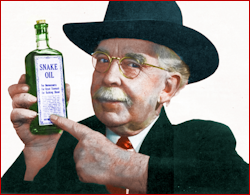
Driscoll's rapid downfall was partially sparked by accusations that he was a serial plagiarizer, and one of the charges made against him was that his sermons were written for him, at least in part, by Docent.

Management and staff at Docent are clearly sensitive about their reputation as an illegitimate shortcut enabling dilettante preachers to bypass the work they should be doing in sermon preparation. Docent's current website reflects the company's uneasiness with the idea of writing prefabricated sermons for lazy pastors. In the website's FAQ, the first question listed is, "Does Docent Write Sermons?" Their answer:

Docent does not and will never write sermons. We started Docent to help pastors become better preachers, and pastors will never become better preachers with someone else writing their sermons. We have received requests from potential clients to write sermons in the past, but we have declined to work with those pastors because writing sermons violates our core values.

To put it affirmatively, we believe that pastors are called to write their own sermons for their flocks.


On the other hand, they say they will
custom create—from scratch—content for busy pastors: sermon research, congregational surveys, small group, discipleship, and leadership pipeline curriculum, book summaries, assistance in turning the pastor’s content into books, and position papers and training seminars to help staff and/or attenders grapple with cultural challenges.

Docent partners with pastors to provide research assistance to lighten their load and help them serve their churches more effectively. We do provide sermon research, leadership consultation, and custom curriculum.


And they acknowledge that "there is no way for us to know with certainty that our clients are not misusing the material we provide them with."

There are, of course, legitimate ways a pastor can benefit from the help of a skilled researcher—fact finding, statistics, survey data, demographic details, or help in finding documentable sources for anecdotes or unsourced quotations. (I regularly answer questions from pastors who ask, "Did Spurgeon really say this thing that is often attributed to him? And if so, what's the source?") Nothing wrong with getting help at that level. Though candidly, AI would seem to render Docent's services unnecessary for questions like that.

Here's an informative criticism of Docent. I don't need to join the dogpile. Docent are by no means the worst in this internet-era genre of groups offering shortcuts for preachers. Perhaps they really do try to guard how their research is used. They say they try to "notice red flags if a client is regularly using too much of the content from the brief." I'm not sure what they might do (if anything) when they learn that a pastor is using Docent as an illegitimate shortcut. But at least they say they don't approve of or encourage that use of their work.

Other services and apps are available that don't seem to have any qualms at all about helping pastors cheat. There's Verble, who advertise with the slogan "Effortless Sermon Writing . . . Turn Scripture, prayer, and reflection into a clear, powerful sermon in minutes." Then there's Sermon Box, where you can buy whole sermon series, replete with "modern media packs" and "worship visuals." Or Rick Warren's Pastors.com. They say, "Our passion is to have healthy pastors leading healthy churches for the global glory of God." But in reality the website is a crass marketplace peddling prefabricated sermons and other material (mostly by Rick Warren) with precious little biblical content.

I could go on. It seems a lot of unscrupulous hustlers are making money hawking superficial sermons to slothful preachers.
There was a brief scandal among Southern Baptists in 2021 (dubbed "sermongate") when someone pointed out that SBC president Ed Litton preached the same sermon, nearly verbatim, that the previous SBC president, J. D. Greear, had preached a year earlier. (It soon came to light that this was a longtime pattern of Litton's.) Greear himself faced accusations that he had taken a personal anecdote from Paul Tripp and retold it as his own.

Every now and then I'll get a letter or email from an elder somewhere who has discovered that his pastor is merely reading transcripts of John MacArthur's sermons or lifting material verbatim from his commentaries—while pretending he is preaching sermons that came out of his own study. John had no objection if other pastors incorporated into their messages ideas and observations borrowed from his sermons, and he didn't expect (or even desire) to be named in a credit line every time a preacher used an idea from one of his sermons or commentaries. But he did not approve of preachers using verbatim excerpts from someone else's work and passing it off as if it were their own original material. That is plagiarism. John's comment was that a man who does that is not a preacher; he is a performer—an actor.

But apparently there are a lot of men filling pulpits in evangelical churches who don't much bother to study the Scriptures for themselves. They use the work of others without attribution and pretend their sermons are the fruit of their own study. Whether they recite full sermons or just steal a paragraph here and there doesn't matter. It is still plagiarism. It is an illegitimate shortcut, and if a preacher does it routinely, in my judgment, he is not qualified to teach.

AI presents a whole new level of temptation for lazy preachers. It also offers a new and more efficient way to discover plagiarism in a pastor's sermons. If a preacher is reciting material verbatim from a published source, the AI machine will recognize that level of plagiarism pretty easily.

But as noted, AI can also be used in place of a research group like Docent. You can ask almost any AI app to write material for a sermon on, say, John 3:16, and the response will come back in seconds. AI is truly intelligent. The results can often be preached with no or minimal editing. And it will probably pass as "original," in the sense that it isn't word for word like anything currently available.

Having AI write sermon material for you is still an illegitimate shortcut, and your ministry will suffer if you do it—because it will isolate you from the sanctifying influence that you gain when you study the Scriptures for yourself. Second Timothy 2:15 should weigh heavily on the conscience of any preacher who takes such shortcuts.

Almost every website that offers sermon-prep shortcuts for preachers will say things like, "Pastors today are busy with administration, planning, organizing, counseling, and a host of other duties. We can help minimize the time you spend preparing sermons."



But preaching the Word, in season and out of season, is the primary duty and first priority of every pastor. If a preacher finds his schedule is too busy to spend personal time studying the biblical text and preparing a sermon, then he needs to cut something else out and "devote [himself] to prayer and to the service of the word" (Acts 6:4).

"Are you saying there is no use for AI in sermon preparation? We all use commentaries. How is this different? Where do you draw the line between plagiarism and borrowing an idea from Spurgeon?"

This is not complex: You can use any tool available for study to gain information and ideas.

But using words you didn't write and passing them off as your own, or copying directly from someone else's material without attribution (even if you rephrase) is plagiarism, an implicit form of bearing false witness.


Phil's signature


16 August 2025

Whither TGC?

by Phil Johnson

If the following article seems a bit dated, it's because I wrote it on February 29—Leap Year—2024, just before the start of last year's Shepherds' Conference. Someone had asked me to explain why I often seem concerned about (if not outright opposed to) so much of what is featured and promoted online by The Gospel Coalition (TGC). This article was an effort to distill my thoughts succinctly.
     Soon after the conference I had shoulder surgery, leading to a string of odd and mostly unrelated complications. Providentially, the ensuing medical tests brought to light the fact that I have Multiple Myeloma. That diagnosis quickly led to many subsequent treatments and hospitalizations over the past year. And in all the confusion, I totally forgot this document—until I found it today while archiving some old computer files. I'm pretty sure I never posted this anywhere. It's time to remedy that oversight.

ere are four items—a small sampling of some typical issues that illustrate my concerns about the doctrinal and ideological trajectory of The Gospel Coalition:


Despite the Coalition's stated view that the church needs to "dethrone politics," the organization's political sympathies seem suspiciously partisan. The political consensus among TGC contributors has a decidedly leftward tilt. Politically conservative voices are rarely heard or taken seriously by TGC writers.
     To cite one example, TheGospelCoalition.org has featured several articles by Michael Wear, Democrat strategist and former member of Obama's White House staff. Wear was also a key figure leading Obama's 2012 reelection campaign. He still works full time trying to persuade Christians to vote Democrat despite the Democrat Party's radical support for abortion on demand.
     TGC's website also published a glowing review of Wear's book, Reclaiming Hope: Lessons Learned in the Obama White House about the Future of Faith in America. Among other things, the reviewer says, "Part of the agenda of Reclaiming Hope is to establish that, in spite of the dysfunctions of the culture war, politics is good; it's a primary mode of doing justice and mercy in God's world." The book (and the TGC review) celebrates Obama's record on "justice and mercy" as the principal category of political achievement in which "Obama did exceptionally well." That seems a fairly myopic assessment of a presidency under which ethnic strife, crime, abortion, drug use, and general hostility to biblical values in America increased at unprecedented rates.
     Wear is of course not the only left-leaning political figure who has been platformed by TGC. Coalition editors seem to favor progressive and quasi-progressive viewpoints from pundits like Ed Stetzer, Russ Moore, Ray Ortlund, Karen Swallow Prior, and David French (all of whom who seem never to miss an opportunity to scold conservatives while making concessions to secular progressives).

The relentless platforming of Sam Allberry is problematic, for reasons that should be obvious. His resolute defense of same-sex attraction seems quite contradictory to the principle Jesus sets forth in Matthew 5:28. On the one hand, Allberry has shown that he is capable of saying things that are good and edifying. It's true that he formally disavows same-sex marriage and clearly states that same-sex sexual relationships are sinful. But on the other hand, he insists that homosexual desire is not necessarily a sin to be mortified. He pleads for Christians to embrace and support people who self-identify as same-sex attracted. He and those influenced by his rhetoric have opened a door through which more radical activists have now come to lobby for full acceptance of "gay Christians." The organization Allberry helped found, "Living Out," has been rightly criticized for their tendency to see how far they can push the limits of propriety and holiness in order to "encourage" people who are attracted to members of their own sex.
     There are other indications that TGC is poised for compromise on biblical sexual ethics. For example, see TGC's positive review of Greg Johnson's book Still Time to Care: What We Can Learn from the Church's Failed Attempt to Cure Homosexuality.

TGC badly mishandled almost every aspect of the COVID crisis, uncritically echoing untruths that we now know were deliberately spun by Dr. Fauci and Francis Collins, parroted by most of the media, and used by government officials to impose tyrannical restrictions. Officials in Canada were literally jailing pastors while letting rapists walk free. In California the government was closing churches while opening casinos, strip clubs, and massage parlors. Officials in every major developed country forced policies on people that the politicians themselves flouted.
     Meanwhile, TGC writers were harshly critical of Grace Church for gathering to worship while county officials tried to keep us closed. None of the opinion pieces on COVID at TGC gave a helpful response to government and health officials' declaration that church meetings are "nonessential." The stance our church took has been fully vindicated by the courts and by facts that have since come to light. Namely, we now know the truth about the uselessness of masks, the ineffectiveness (and dangers) of the vaccines, and the less-than-apocalyptic danger of the virus itself.
     TGC seems to have shrewdly and quietly deleted the articles they published lauding Collins and Fauci. They no doubt wish they had taken a more balanced and charitable perspective than they took during the long months of lockdowns and the immediate aftermath. But they have never actually apologized for their harsh condemnations of people who raised legitimate questions about the official narrative.
     Overreaching government policy during COVID dealt a significant blow to churches everywhere, and TGC (where "engaging culture" is supposed to be a priority) squandered a choice opportunity to make a clear statement to our culture about the vital importance of gathered worship for the church of Jesus Christ.

TGC has shown a clear preference for the Woke notion that systemic injustice is a major factor causing ethnic strife, political unrest, and other social problems—and that practically all our institutions need a major overhaul to compensate for that. Since 2014 or so, themes from the secular debate about "social justice" have dominated the web pages at TheGospelCoalition.org. The overwhelming majority of TGC conferences, articles, videos, and podcasts dealing with elements of that debate have yielded ground unnecessarily to the underlying neo-Marxist ideology that gave birth to such a twisted definition of "justice."
     We are by no means alone in this perspective. The dozen or more Christian leaders who drafted the Dallas Statement on Social Justice in June of 2018 all shared a common concern about the aggressive way TGC promotes an unbiblical notion of what justice entails.


Virtually all the concerns we have with TGC are prompted by the organization's tendency to move away from beliefs and values usually associated with the evangelical mainstream, while looking for things to praise in newer ideas touted by today's self-styled "progressives." It seems the organization desperately wants to stay in step with (or follow close behind) the trends of popular culture and the mores of secular thought leaders in the realms of academia, entertainment, and politics. We welcome biblical critiques of popular evangelicalism, but we are absolutely certain that remedies for what ails the evangelical movement will not be found by gleaning and embracing what's currently popular among secular progressives.


PS: Here's an exchange I had with Joe Carter more than eight years ago about TGC's obsession with the trivial matters that dominate pop culture compared to the scant attention they give to actual gospel issues. The organization's middle name seems something of a misnomer, given what they actually pay attention to.

Phil's signature