|
Click HERE to read the post Blogger tried to censor.



|
Click HERE to read the post Blogger tried to censor.
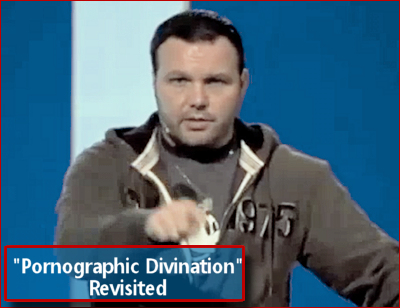
 any readers will remember a blogpost I wrote in August of 2011 analyzing Mark Driscoll's claim that he had a bizarre spiritual gift: an uncanny psychic ability enabling him to function as a kind of supernatural peeping Tom. He claimed to be able to watch vivid, full-color replays of his counselees' sexual sins on some sort of cosmic big screen. It was a tasteless claim—
No, it was worse. It was a rank blasphemy to claim such a freakishly prurient peculiarity had been given to him by the Holy Spirit.
A few weeks ago he filed a copyright claim to have YouTube remove that video. It was an ironic stance for him to take, given his own reputation as an unbridled plagiarist.
Anyway, I never received any notice of the takedown, and since I rarely look at my own YouTube channel, I didn't notice until YouTube's referees had already judged Driscoll's claim as legitimate. I nevertheless wrote three appeals pointing out that my use of the video clearly falls well within the 1976 Copyright Law's definition of "Fair Use," because I posted it in order to make critical commentary for a purpose that was both newsworthy and (in the proper sense) educational.
YouTube's judges held their ground, however—apparently because my actual criticisms of Driscoll's remarks were posted in the accompanying blogpost, and not in the video itself.
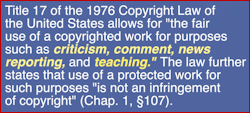 So I have corrected that problem by incorporating the gist of my critical remarks into the video and reposting it, together with a quotation from the relevant legal statute demonstrating why the Fair Use doctrine protects my posting of these excerpts.
If you'd like to see the revised video (unaltered except for the addition of my commentary), you can observe it where it is now imbedded in that 2011 blogpost, or at my Youtube channel. I won't imbed it here, because frankly it gives me nausea every time I see it. But I wanted to keep the matter well documented, because I hear that Driscoll has gained a sizeable new following of naive young people, and frankly, I think he is more dangerous and more unorthodox than he was at the peak of his original popularity.

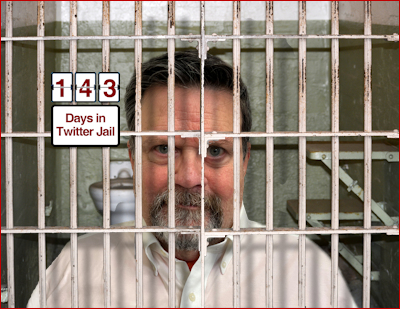 Still no response from Twitter:
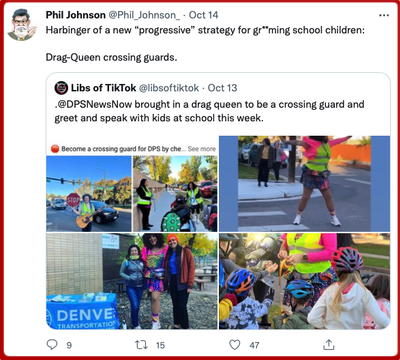
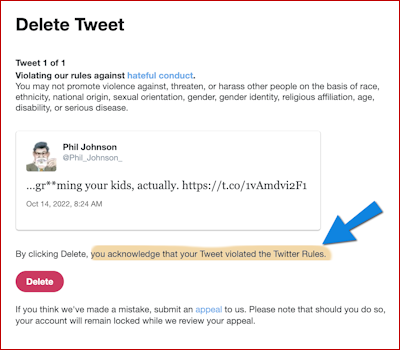
| 19 December update: People keep writing to tell me they don't think I'm banned from Twitter because if they go to my Twitter account, they can see my Tweets. Here's the deal: Anyone with Twitter access can see my old Tweets, up to the day I was banned (October 14, 2022). But I can't sign on, post, or read any Tweets using my own account. They are holding me hostage, insistent that I must first confess that I committed a crime of "hate speech." What did I say? Well, I linked to a news story about a drag-queen crossing guard hired to work at a public elementary school. Then on that same day I linked to a TikTok video posted by an elementary-school teacher who insists it ought to be a very high priority for all public schools to indoctrinate kindergartners to embrace and celebrate gender fluidity, regardless of their parents' opinions. And then I said this is tantamount to government-sponsored, taxpayer-funded grooming. Twitter demands that I delete the offending Tweet[s], and they say I can have my account back whenever I do that. However, they also add: "By clicking delete you acknowledge that your Tweet violated the Twitter [hate speech] rules." I refuse to kowtow to such a worldview. Hence it seems I'm off Twitter permanently or until they acknowledge my right to have moral convictions that are shaped by Scripture rather than the opinions of humanistic elitists. It's not an insignificant fine point, in my judgment. |
|
Twitter's staff are just as unresponsive as ever to emails and other queries from people they have arbitrarily banned.
Elon Musk needs to assign a cohort of capable employees to answering people's appeals, or (better yet) go ahead and implement the general amnesty he promised.
 witter banned me a month ago today because I said that local school boards' efforts to normalize sexual perversion in the minds of elementary school children is taxpayer-funded, state-driven grooming.
Twitter says I can have my account back if I will delete the Tweet that offended their censors' notion of civil propriety. For the record, I would be happy to do that. I have even written them and offered to to that.
However—
They also expressly stated that by deleting the Tweet I would be formally admitting I broke Twitter's rules against "hate speech," and that is something I cannot conscientiously do.
This is a classic example of how social media moguls are attempting to overrule and reshape the consciences of their users. My Tweet was not an expression of "hate" aimed at anyone—not even the drag-queen crossing guard into whose custody kindergartners have been placed (contrary to many parents' wishes)—not even the teacher who boasted on Instagram how she was inculcating LGBTQRSTU ideology into the minds of her elementary students while keeping her moral agenda secret from parents. My Tweet (like this blog entry) was a simple statement of my own moral convictions, without malice or ill-will.

Several have urged me to go ahead and delete the offending Tweet rather than be silenced. I will be happy to do that if Twitter will state in writing that they understand my compliance with their wishes is not a guilty plea.
I'm not asking for anyone to start a campaign about this. I'm simply explaining (for the sake of many who keep asking) why I'm off Twitter and why I haven't done what Twitter is asking me to in order to get my account restored.
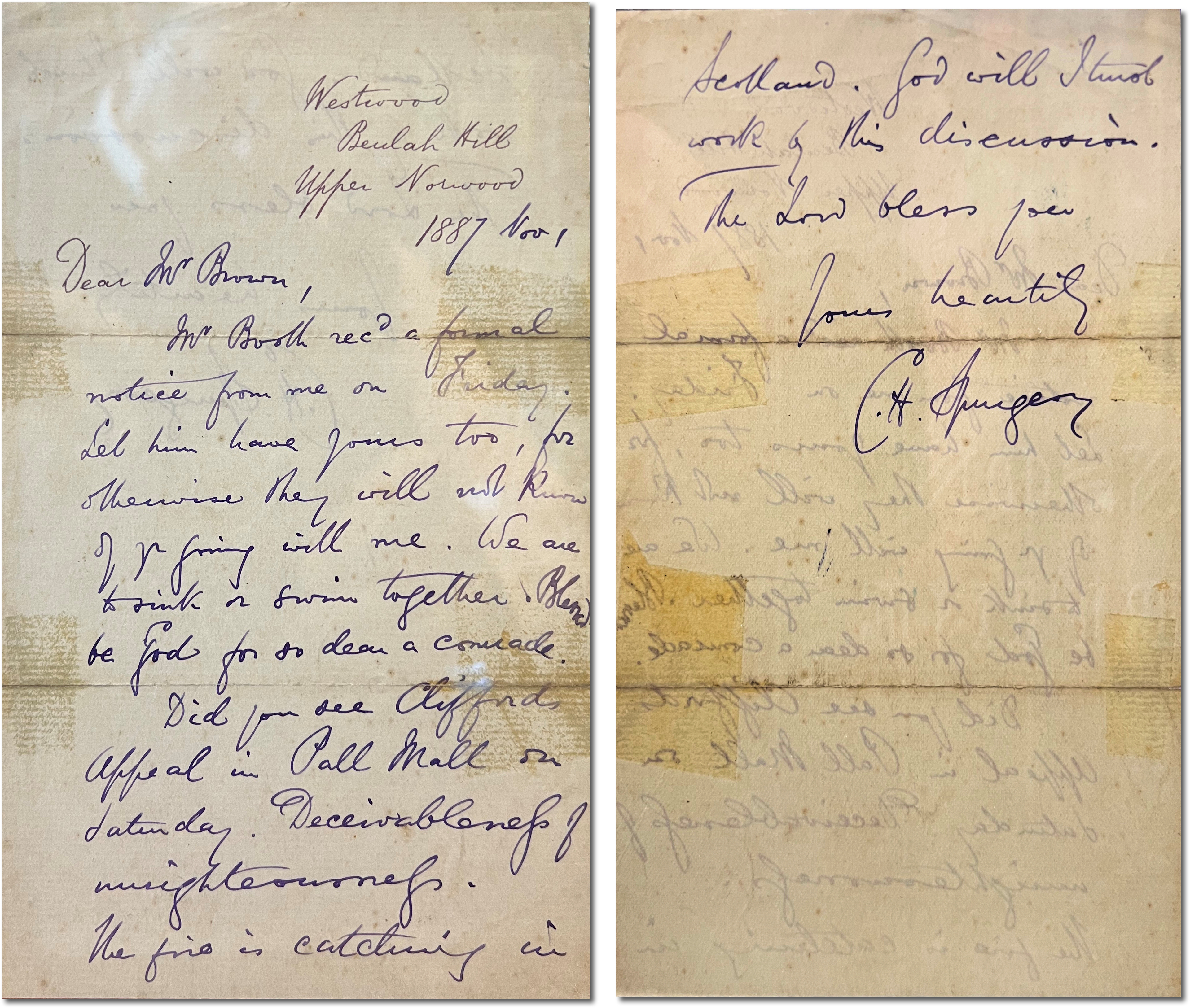
 n October 28, 1887 (a Friday)—well into the Down Grade controversy—Charles Spurgeon wrote the Secretary of the Baptist union to withdraw his membership in the Union.
The following Tuesday, November 1, he hand-wrote this letter to his friend Archibald Brown, urging him to withdraw from the Union as well:
|
My most treasured item of historic Baptist memorabilia is the handwritten original of that letter. Some details about the context:
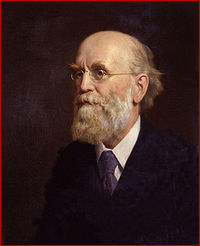 "Clifford" is John Clifford, who had written an unctuous "Appeal to Mr. Spurgeon" in the Saturday edition of The Pall Mall Gazette. (That article is what Spurgeon is referring to in his letter to Brown.)
Clifford was serving at the time as Vice-President of the Baptist Union. A year later he would be elected president, and in that role he would preside over the Baptist Union's infamous censure of Spurgeon. In his mostly excellent biography of Spurgeon, W. Y. Fullerton charitably tries to portray Clifford as "one of Mr. Spurgeon's most ardent admirers." He was anything but. He was analogous to those who call themselves "progressive" today.
"Clifford" is John Clifford, who had written an unctuous "Appeal to Mr. Spurgeon" in the Saturday edition of The Pall Mall Gazette. (That article is what Spurgeon is referring to in his letter to Brown.)
Clifford was serving at the time as Vice-President of the Baptist Union. A year later he would be elected president, and in that role he would preside over the Baptist Union's infamous censure of Spurgeon. In his mostly excellent biography of Spurgeon, W. Y. Fullerton charitably tries to portray Clifford as "one of Mr. Spurgeon's most ardent admirers." He was anything but. He was analogous to those who call themselves "progressive" today.
When Clifford first came to London at the age of 20 in 1856, he came to the city specifically to hear Spurgeon. But even in those days, Clifford was hardly a solid Bible-believing evangelical. He was enthralled with Ralph Waldo Emerson and had seriously contemplated becoming a Unitarian. Ultimately, however, he remained at least nominally evangelical and in 1858 took a position as pastor of the Praed Street Baptist Church in London, where he remained until his retirement in 1915.
By the late 1880s, Clifford had concluded that Spurgeon and the brand of evangelical conviction he represented were oldfangled and out of fashion—and Clifford thus helped lead the modernist effort to silence Spurgeon's concerns about doctrinal down grade. Tom Nettles describes Clifford as an "irrepressible liberal. Personally, I like Spurgeon's description of Clifford's passive-aggressive approach to Spurgeon and the Down Grade: "Deceivableness of unrighteousness!"
A month later, Spurgeon wrote the secretary of the Baptist Union Council, declining the council's plea for him to reconsider his resignation. In that letter, Spurgeon said candidly, "I regard full-grown 'modern thought' as a totally new cult, having no more relation to Christianity than the mist of the evening to the everlasting hills."
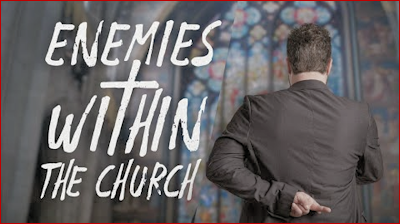
 finally had an opportunity to see the documentary "Enemies Within the Church," and as promised, here is a candid review:
The Good
You need to watch this documentary. Its central message sounds a clear and necessary alarm that today's evangelicals (leaders and lay persons alike) urgently need to hear and heed. It is a two-hour video presenting undeniable evidence that influential forces within the church have been (and still are) working hard to advance an agenda that is rooted in neo-Marxism, overlaid with identity politics, and peppered with postmodern jargon. In other words, countless Christians are being force-fed an ideology that comes from the world, not from Scripture. It is being pushed in our seminaries and churches with tactics (and a lot of financing) taken from secular left-wing sources.
The worldview and values these change-agents promote are clearly influenced by radical feminism, the sexual revolution, academic elitism, socialist tenets, and critical theory. Those who traffic in these ideas don't necessarily sound overtly hostile to the authority of Scripture. Instead, they subtly undermine moral principles, vital doctrines, and the gospel itself. They subvert historic evangelical convictions by lobbying for Woke doctrines and liberal trends while relentlessly warning evangelicals that the church will lose the next generation, maybe even die, if we don't stay in step with the drift of the secular intelligentsia.
 This is by no means a new phenomenon. There is an easily traceable line of descent that runs from the Socinians of the 16th and 17th centuries through the Deists and Unitarians of the 18th century, the modernists of the 19th century, the liberals and pragmatists of the 20th century, and the Emergents of the 21st century. Today's Wokevangelicals are following identical lines of argument, employing similar rhetoric, and drifting in the same direction as all of those previous departures from evangelical orthodoxy.
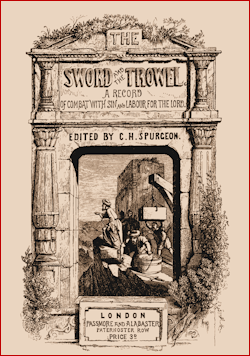 In 1887, The Sword and the Trowel (Charles Spurgeon's monthly journal) published two articles titled "The Down Grade," by Robert Schindler. A fierce polemical war ensued and lasted for several years, known as "The Downgrade Controversy." Anyone who has read about Spurgeon's final years of ministry knows of this controversy. Spurgeon himself and most who were close to him believed the stress of fighting the Downgrade hastened his death. He died less than five years after publishing Schindler's articles.
Robert Schindler's (and Spurgeon's) whole point was that the path of liberal apostasy is well-worn and familiar, and it should therefore be obvious to any vigilant observer when a church, educational institution, denomination, or Christian leader starts down that path. As the title suggests, Schindler noted that it's a steep downhill path, so once any person or group takes that turnoff, it becomes nearly impossible to stop the movement downhill.
Schindler was warning against the modernist influence that infected the Baptist Union in Victorian England, but his words are totally applicable to the current drift of Wokevangelicalism.
Be forewarned: "Enemies Within the Church"—like those 1887 articles in The Sword and the Trowel—will be deeply controversial. Sadly, many believers will conclude that the controversial nature of the documentary basically nullifies its message. After all, aren't Christians supposed to love one another? How can we warn against the influence of fellow church members and not be guilty of divisiveness?
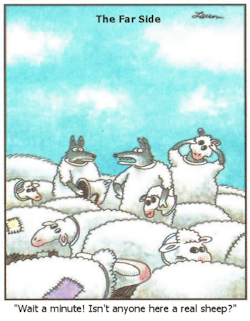
But the New Testament is full of admonitions to be on guard against destructive influences within the church. These are wolves in sheep's clothing (Matt. 7:15)—"fierce wolves [that] will come in among you, not sparing the flock; and from among your own selves will arise men speaking twisted things, to draw away the disciples after them" (Acts 20:29-30). We are commanded to "to contend for the faith that was once for all delivered to the saints" (Jude 3)—especially against those who want to rewrite the faith anew for each generation.
This documentary does a superb job in that task, and for that reason I commend it. The cinematography is stunning. The editing is superb. The story is told in a clear and compelling way. The message is poignant. Overall, I give the production high marks, and I hope it gains a large audience.
The Bad
I should, however, mention that I have a few minor theological quibbles. The narrator (Cary Gordon) and several of the featured faces seem to be from Wesleyan backgrounds. That's not my complaint (though I'm a Calvinist). If there was any overt Arminianism in the presentation, I didn't notice it. On the whole, they did a fine job.
But at times speakers mentioned points of doctrine that I thought should have been presented with greater care, or omitted completely. For example, around 47:40, one of the interviewees mentioned John 1:14, "The Word became flesh and dwelt among us."
Pastor Gordon replies, "That means the Old Testament was made flesh in Jesus Christ."
"Yup," says the interviewee.
Pastor Gordon continues: "So if we're to vilify the Old Testament and say we don't need it anymore, we're talking about some part of Jesus."
"No!" I say out loud. That's not what the apostle John is saying. The expression "the Word" throughout John 1 is a reference to Christ in his eternal glory, not the Old Testament. I share Pastor Gordon's contempt for the idea that Christians don't need the Old Testament, but it's not necessary make that point by getting sloppy with our exegesis of John's gospel.
Still, that's a disagreement that doesn't materially affect my endorsement of the film. It doesn't alter or diminish the validity of the larger central message.
A bigger objection of mine would be the way the documentary deals with the Ten Commandments. Here again, I agree with the point the documentary apparently wants to make, but I'm not completely satisfied with how they make it.
Here's the part I agree with: Postmodern evangelicals do overemphasize the love of God and deliberately truncate what Scripture says about sin, righteousness, and judgment—to the point where most in the evangelical movement today seem to think the whole gospel message is that God is love, or that God loves you in particular. The documentary correctly points out that we have not preached the gospel at all if we don't deal with the problem of sin and call unbelievers to repentance (Acts 17:30).
(I also agree that anyone who says the Ten Commandments have no relevance for Christians is an antinomian. And when you try to syncretize Wokeism with evangelicalism, antinomianism is one of the inevitable, and spiritually deadly, results.)
Nevertheless, I wish the documentary had taken greater pains to make clear that the Ten Commandments are not the gospel, or even part of the gospel. They are a prelude to the gospel—a tutor that points us toward Christ and the gospel (Gal. 3:24). The gospel itself is a message about the work of Christ to liberate us from the bondage of sin and the condemnation of the law. The heart of the gospel is the doctrine of justification by faith—not the Ten Commandments.
I'll mention just one other nagging complaint: I think what the documentary says about pietism vs. political activism seems to imply that these are the only two options in a fairly well-defined either/or choice for Christians. But lots of godly, biblically astute, reasonable Christians are neither pietists nor political Zealots. They recognize that churches tend to lose their focus and sometimes even cease preaching the gospel when they become immersed in unbridled political activism.
The true remedy for what ails both the evangelical movement and secular culture is not something that can imposed by legislation. Nor can righteousness be achieved by Christians flexing their collective political clout. "If a law had been given that could give life, then righteousness would indeed be by the law" (Gal. 3:21). Dominionism is a corruption of the church's true agenda (Matt. 20:25-26). The disciples, not the party of the Zealots, are our role models in seeking to turn the world upside down.
The Ugly
Now, if you've seen the online chatter surrounding the release of this documentary, you may be aware that there's a noisy squad of smart-alecky Zealots who began badgering a list of conservative Christian leaders who had previously spoken out against the influence of Wokeism. The Zealots demanded endorsements for this documentary almost as soon as it appeared in a downloadable format. Their nagging quickly turned to ugly public taunts and accusations.
I don't believe the documentary's producers were directly involved in or keenly aware of that campaign of harrassment. In fact, Judd Saul, the project's director, responded graciously to all the noise by making sure I had a speedy opportunity to see the full documentary. I would have eventually watched it anyway and most likely posted a recommendation, but I appreciate Judd's efforts to link me up with a timely review copy.
 Still, those unauthorized efforts to promote the film by browbeating men in Christian leadership have prompted me to say once again that nothing undermines biblical discernment and the cause of truth more deeply and hurtfully than haughty controversialists who act like they firmly believe they are the kingpins and custodians of the cosmic war against false teaching. They seem to think the truth is best advanced by intimidation, insults, crass language, and caustic rhetoric. Passages like 1 Corinthians 13:4-7; Galatians 5:22-23; and 2 Timothy 2:24-25 have no obvious impact on their dealings with others—because as they will point out, undiscerning people misuse those texts to justify their refusal to contend for the faith. But that doesn't give spiritual warriors license to ignore those features of true Christlikeness altogether.
My counsel: Beware of anyone who treats captiousness as sport. Frankly, such people actually undermine the cause of truth, and in their own way, they can be just as dangerous to the spiritual health of the church as the out-and-out Marxists.
One Final Thing
Virtually all the negative pushback I have seen aimed at "Enemies Within the Church" has come from Southern Baptist sources. The Conservative Baptist Network promoted the film and announced that they would host the premier on the campus of Mid-America Baptist Theological Seminary. The President of Southwestern Baptist Theological Seminary protested the showing and Tweeted an open letter expressing with "deep disappointment but strong conviction," a charge that the documentary contains "scandalous and scurrilous slander."
What about that claim? What is the right response to those who claim the documentary is slanderous?
 Let me speak plainly: I don't have the time or the need to investigate and verify every individual claim made in the documentary. "Enemies Within the Church" echoes an opinion I have stated many times already, so yes I emphatically agree with the central message. Most of the claims made are either well-established facts, or they are sufficiently documented in the film itself with video records and direct quotations. Plus, the clear and persuasive testimony of multiple eyewitnesses is hard to gainsay.
So the documentary raises questions that need to be answered. It points out issues that need to be addressed. It highlights problems that need to be corrected. To single out a disputed claim or two and blow the whole thing off as "slander" would be a monumental mistake. Deconstructing the critics' concerns by splitting hairs over terminology or by denying that Critical Race Theory (CRT) has infiltrated Baptist seminaries is not an adequate answer to the concerns raised in this documentary. We've all seen the videos where Baptist seminary professors do parrot rhetoric from CRT sources. The concerns raised by this film cannot be sidestepped or pushed aside. They must be answered.
For the record, I didn't notice any factual claims in the documentary that struck me as questionable. Some statements were made that I would like to see thoroughly documented. For example, a critic might claim that some of the connections drawn between various people and organizations may or may not be more tenuous than the narration noted.
However, it would be ludicrous for any biblically minded believer to deny that large-movement evangelicalism is speeding quickly in a bad direction; that some of the very best leaders in key evangelical institutions do not appear to be trying very hard (if at all) to reverse the drift; and that many other key leaders are aggressively promoting wokeism, identity politics, and other ideas that clearly obscure the straightforward simplicity of the gospel. Those are all legitimate—and weighty—concerns.
In the 1970s, all conservative evangelicals regarded the Sojourners organization as a left-wing outlier and a threat to orthodoxy because of the socialist and radical political agenda they were pushing. Today that point of view is considered mainstream in the larger evangelical movement. Such a profound shift does raise vital questions (or should I say "serious doubts"?) about whether we are truly together for the same gospel.
"Enemies Within the Church" demands a careful inquiry and answers to those questions.

 e regard the wearing of masks in worship first of all as a matter of conscience—and since we are forbidden by the teaching of Christ not to make extrabiblical religious rules that bind men's consciences (Matthew 23:1-7; 15:1-9), we neither mandate nor forbid the wearing of masks in worship.
 Veils and face coverings have profound religious significance in many world religions. Indeed, much of the rhetoric surrounding COVID masks (even among evangelical Christians) describes them as symbols of personal piety. Serious questions about the usefulness, effectiveness, or medical necessity of masks are routinely dismissed or swept aside, and people are told to wear them simply because they are a tangible, visible means of showing love for one's neighbor. This rationale is pressed on people's consciences regardless of whether it can be proved statistically that they really safeguard anyone from the virus, and irrespective of the fact that masks can cause other medical problems. But COVID masks have become, in effect, secularism's substitute for religious vestments. No one can reasonably deny that face coverings have become the chief symbol of popular culture's sanctimonious devotion to the secularist credo.
But one of the distinctives of Christian worship is face-to-face fellowship. Koinonia is the Greek expression the New Testament uses to describe it. The word conveys the idea of community, close association, and intimate social contact. Thus the apostle's instructions: "Greet one another with a holy kiss" are repeated four times in the Pauline epistles (Romans 16:16; 1 Corinthians 16:20; 2 Corinthians 13:12; 1 Thessalonians 5:22).
The importance of face-to-face koinonia is stressed repeatedly. Paul writes, "We . . . were all the more eager with great desire to see your face" (1 Thessalonians 2:17). "We night and day keep praying most earnestly that we may see your face" (3:10). The apostle John writes, "I hope to come to you and speak face to face, so that your joy may be made full" (2 John 12). "I hope to see you shortly, and we will speak face to face" (3 John 14).
Worship, in particular, is best seen as an open-face discipline. Covering the face is a symbol of disgrace or shame (Jeremiah 51:51; Job 40:4). Concealing one's mouth while praising God suppresses the visible expression of worship. The Psalms' calls to worship are filled with the words "tongue," "lips," and "mouth." "Sing aloud unto God our strength: make a joyful noise" (Psalm 81:1). " Wholehearted worship cannot be sung as intended—unrestrained and unmuted—from behind a state-mandated face covering. We see "the Light of the knowledge of the glory of God in the face of Christ" (4:6), and our faces were designed by him to reflect that glory back to heaven in uninhibited praise.
It is true, of course, that for now, "We see in a mirror dimly, but [someday] face to face" (1 Corinthians 13:2). That speaks of a face-to-face encounter with Christ himself, when we will be brought into the fullness of knowledge and moral perfection. John the apostle says, "We know that when He appears, we will be like Him, because we will see Him just as He is" (1 John 3:2).
Despite the temporary limitation of seeing heaven's glory as if we were looking in a dim mirror, we nevertheless are privileged as Christians to have a view of divine glory that is superior to what Moses and the Israelites enjoyed at Sinai. We see God's glory revealed in Christ—"glory as of the only begotten from the Father, full of grace and truth" (John 1:14). Unlike Moses, who was shielded in the cleft of a rock from seeing the full display of divine glory; and unlike the Israelites, who only saw the fading reflection of glory on Moses' face (and even that was covered with a veil) we see Christ so clearly revealed that it is as if we are looking in the very face of God's glory. "We all, with unveiled face, beholding as in a mirror the glory of the Lord, are being transformed into the same image from glory to glory" (2 Corinthians 3:18). Again: we see "the glory of God in the face of Christ" (4:6).
Yes, the language of that biblical passage is symbolic. We don't literally see the face of Christ physically. For now, we see him as he is revealed on the pages of the New Testament. But the symbolism embodied in Paul's description of seeing him with "unveiled face" is important, and the wearing of masks—especially government-mandated masks that serve as the vestments of secular religion—feels like a covert attempt to erase one of the core truths that makes Christianity unique.
Those are my personal convictions about masks. It's not a dogma we teach. It's certainly not a rule we expect people in the church to swear fidelity to. Again, we don't want to bind anyone's conscience with manmade restrictions. We especially do not want to shame the person who wears a mask purely because he or she genuinely believes the current orthodoxy about masks as an effective shield against viral transmission. People in the church are free to wear masks if they choose. But people who share the above view are likewise free to worship, sing, pray, and proclaim God's Word without a face covering—even if that goes against the vacillating, sometimes arbitrary, and frequently heavy-handed dictates of government officials. It is simply not the church's duty to enforce executive orders based on a politician's whimsy—particularly when those edicts impinge on our freedom of worship.

Amazon also has it. See details at Kress
Also available at Logos
Available on Kindle and in Logos
View readers' favorite Kindle excerpts
|
Remember that you are our guests. We will, at our discretion, delete comments that we find off-topic, derailing, un-civil, slanderous, trollish or troll-feeding, petulant, pestiferous, and/or otherwise obnoxious and non-constructive. If we warn you, stop it. After no more than three warnings, you will find yourself banned, and all your future comments will be immediately deleted.
See an error in the post? How clever of you! Email the author. If you comment a correction, expect the comment to disappear with the error.
If you are confused about how the specifics of these principles play out in practical terms, you'll find a longer list of rules HERE.

 |
| The opinions expressed in this blog do not necessarily represent the views of all contributors. Each individual is responsible for the facts and opinions contained in his posts. Generally, we agree. But not always. |